Blog
How to Choose Bridal Bangles in Pakistan: Wedding, Mehndi & Traditional Styles

Start with your outfit colours, not the bangle box. For most Pakistani brides the safe formula is: velvet or glass chooriyan matched to each event’s dress, pearl or golden karas to frame the set, kaleere for the baraat, and one confirmed size before you order. Get those four things right and the rest is detail.
A Pakistani wedding is not one look — it is three or four. Mehndi, mayoun, baraat and walima each have their own colours, photos and mood, and your bangles have to change with them. This guide walks through every decision in order, so nothing is left to the last rushed week.
What Bangles Does a Pakistani Bride Need for Each Event?
Plan one set per event instead of hunting for a single set that does everything:
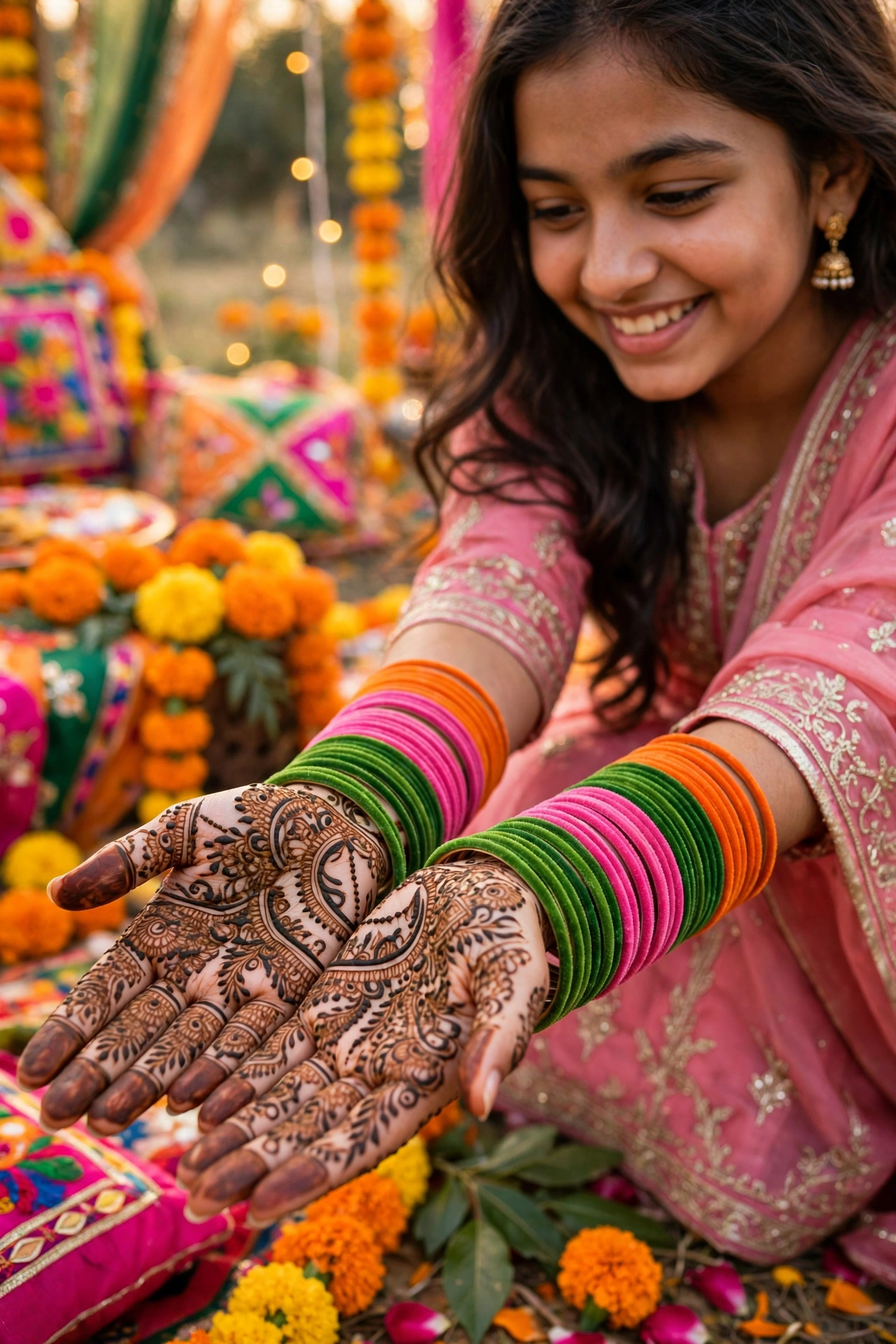
- Mehndi / mayoun: Bright, joyful colours — yellow, green, pink, orange. This is the day for velvet glass sets and Kashmiri bangles with ghungroo that move and chime when you dance.
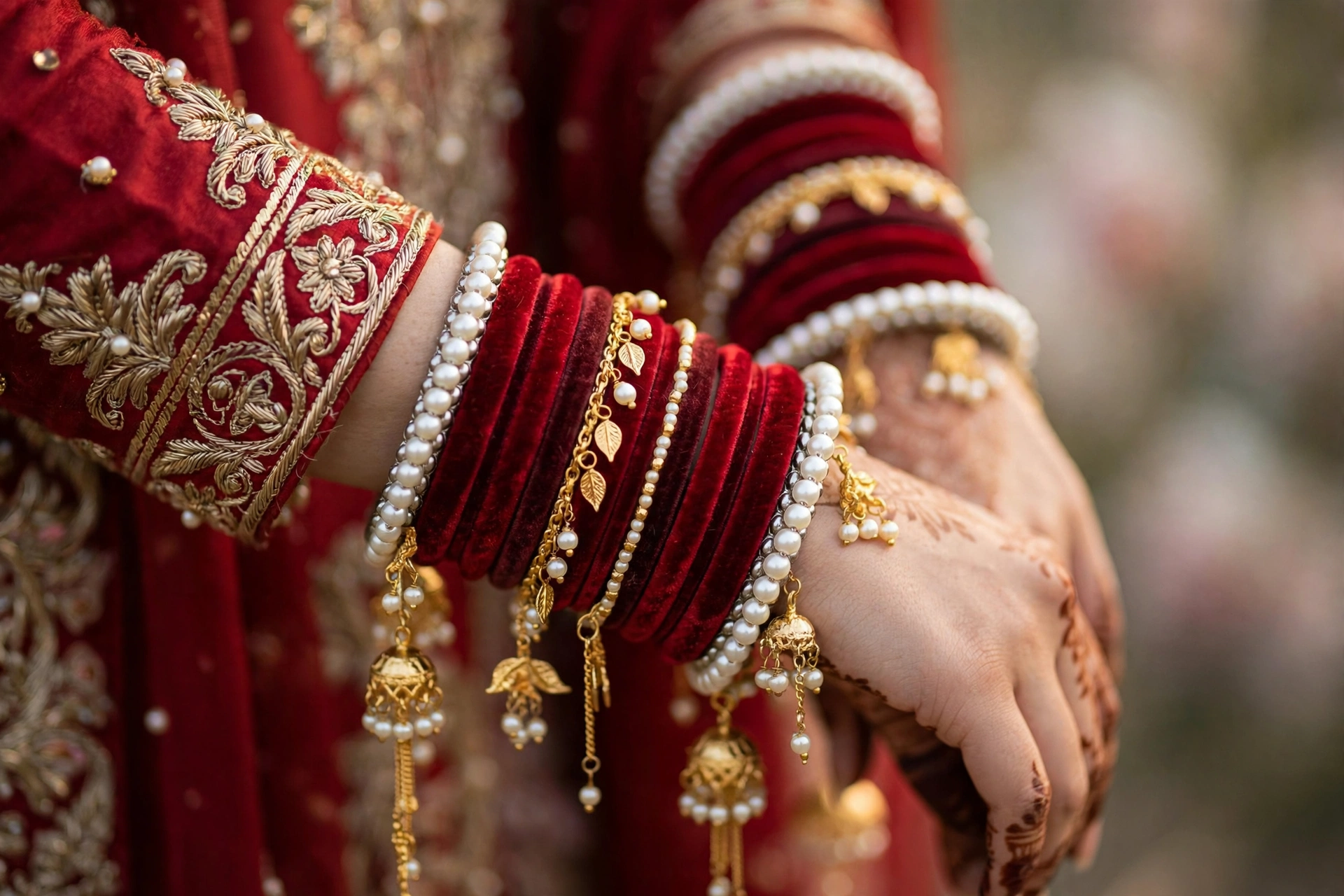
- Baraat: The fullest, most traditional set. Classic bridal choodiyan in red, mehroon or your dress colour, framed by karas, with kaleere hanging over the set for the ceremony and photos.
- Walima: Softer and more elegant — pastels, silver or gold tones, often a slimmer set or metal kangan that suits a formal reception look.
- Nikkah (if separate): Understated and graceful — white, ivory or pale gold bangles, or pearl-accented sets that keep the look serene.
What Types of Bangles Complete a Bridal Set?
Glass chooriyan — the base of the set
The full, colourful base of a bridal wrist is almost always glass. Plain sets build the colour block; velvet glass bangles add the rich, matte depth that photographs beautifully against embroidery. Velvet glass bangles paired with white pearl karas are sold specifically as bridal choodiyan, because the pearl softens the colour and lifts the whole set.
Kashmiri bangles — texture and sound
Kashmiri sets — raindrop designs and ghungroo styles — add the texture a plain set lacks. Brides often wear them on the mehndi, or mix a few Kashmiri pieces into the baraat set so the wrist does not look flat in close-up photos.
Metal kangan and karas — the frame
Two wider metal pieces, one on each side of the glass set, hold the chooriyan together visually and stop the set from looking unfinished. A handmade pearl-studded metal kangan does this job and doubles as a piece you can wear alone after the wedding. If you are weighing up where glass ends and metal begins in your set, the glass vs metal bangles comparison lays out the comfort and durability differences honestly.
Kaleere — the bridal finishing touch
Kaleere are the traditional dangling ornaments tied over the bangle set on the wedding day, symbolising prosperity and happiness. They are worn for the baraat ceremony and the photos that follow, then kept as a keepsake. The signature style in the bridal kaleere range is a gold pearl bangle set with kaleere-inspired jhumka drops, in the Rs 2,000 range.
How Do You Match Bangle Colours With Your Bridal Outfit?
Colour is where bridal sets succeed or fail in photos. These are general styling rules — apply them to whatever shades you choose:
- Red / mehroon dress: The classic route is red and gold — red or mehroon velvet chooriyan with golden karas. A band of green in the set is a traditional contrast many brides love against red.
- Golden / beige dress: Go one shade deeper than the dress — mehroon, bottle green or deep pink bangles — so your wrists do not disappear into the outfit in photos.
- Green dress (common for mehndi): Match the green and break it with gold, or contrast with hot pink or orange for the playful mehndi look.
- Pastel dress (common for walima): Pastel glass bangles with white pearl and karas keep the softness; silver-toned metal works when the dress has silver work.
- Multicolour or heavily embroidered dress: Pick ONE colour from the embroidery and build the set around it. Matching every colour in the dress makes the wrist look busy.
One more rule that saves many brides: match your bangles to the dupatta or the embroidery thread, not to the base fabric — the accent colour is what the camera picks up.
How Do You Choose the Right Bridal Bangle Size?
A bridal set is worn for six to ten hours, often while eating, greeting and posing — an almost-right size becomes a real problem by hour four. Measure the widest part of your hand, across the knuckles with your thumb folded in, and match it against the size chart. Bangle sizes run from 2.2 to 2.12; the most common glass sizes are 2.4, 2.6 and 2.8. The bangle size guide with a free calculator takes your hand measurement and returns your size, so there is no guesswork.
Two bridal-specific tips: if you are between sizes, size up — you will slide the set on over mehndi-day hands that may be slightly swollen, and a looser set can be padded, a tight one cannot be worn at all. And try the full set on once before the wedding day, with your dress if possible, to check the total weight and width against your sleeve.
How Do You Coordinate Bangles With the Rest of Your Jewellery?
- Match the metal tone. If your necklace set is antique gold, keep golden karas; mixing bright silver bangles with antique gold jewellery looks accidental.
- Balance the sparkle. A heavy stone necklace pairs with simpler, colour-led bangles. A minimal necklace lets the bridal set carry the detail.
- Mind the sleeve. Full sleeves with heavy cuffs need a slimmer bangle stack; short or sleeveless cuts can carry the full traditional width.
- Repeat one element. Pearls in the bangles echoing pearls in the earrings, or ghungroo echoing an anklet — one repeated detail ties the whole look together.
A Worked Example: One Bride, Three Events
Here is how the pieces come together on a real budget, using sets from the glass bangles range:
- Mehndi (green/yellow outfit): Velvet glass bangle set in green, Rs 800, with a Kashmiri ghungroo set, Rs 890, mixed in for sound and movement.
- Baraat (red outfit): Velvet glass bangles with white pearl karas — the bridal choodiyan set — at Rs 900, framed by a handmade pearl-studded metal kangan (Rs 600–1,700 depending on the option), with kaleere over the set for the ceremony.
- Walima (pastel outfit): Pastel glass bangles with white pearl and karas, Rs 1,200 — soft, elegant and already coordinated.
Three events, three complete wrists, and the most expensive single piece is the keepsake kangan you will wear long after the wedding.
What Should You Check Before Buying Bridal Bangles Online in Pakistan?
- Real photos and honest descriptions. You should be able to see the actual set, its finish and what is included — how many bangles, whether karas are part of it.
- Your size, stated clearly. The listing should offer your measured size. Guessing a bridal size is the most common cause of wedding-week panic.
- Breakage-safe packaging for glass. Glass chooriyan travelling by courier must be packed for it — ask or check before ordering. Kangan Moti ships glass bangles in breakage-safe packaging.
- Delivery timing. Order at least two weeks before the first event. At Kangan Moti, delivery is a flat Rs 250 with Cash on Delivery all over Pakistan, and orders arrive in 3–5 working days after confirmation — the buffer is for trying the set on, not for the courier.
- A backup plan. From the metal bangles range, one versatile kangan or kara that suits all three outfits means a broken bangle on the day is an inconvenience, not a disaster.
The Bottom Line
Build each event’s set around its outfit colour, frame glass chooriyan with karas or a kangan, keep kaleere for the baraat, and confirm your size before money changes hands. Do that, order early, and your bangles become the easiest part of the wedding — and some of the prettiest photographs of it.
Frequently Asked Questions
How many bangles should a bride wear?
There is no fixed number. A traditional baraat set usually fills the wrist — a full glass chooriyan set framed by one or two wider karas or kangan on each side. Mehndi sets are similar in width but brighter; walima sets are often slimmer. Comfort over a long day matters more than count.
Which colour bangles go with a red bridal dress?
Red or mehroon bangles with golden karas are the classic pairing. Many brides add a band of green as a traditional contrast, or use white pearl karas to soften the red. Match the dupatta or embroidery thread colour for the most photographed effect.
When should I order my bridal bangles?
At least two weeks before your first event. That leaves time for delivery (3–5 working days at Kangan Moti), a trial wear with your outfit, and a size exchange if the set is not right — none of which you want to be doing in wedding week.
How do I find my bangle size at home?
Fold your thumb into your palm and measure around the widest part of your hand, across the knuckles. Match that measurement to the size chart — sizes run 2.2 to 2.12, with 2.4, 2.6 and 2.8 the most common. If you are between sizes, choose the larger one.
Are kaleere necessary for a bridal look?
Not necessary, but traditional. Kaleere are the dangling ornaments worn over the bangle set on the baraat day, symbolising prosperity. If your family follows the custom, wear them for the ceremony and photos; the bangle set underneath should still look complete without them.
Can I mix glass and metal bangles in one bridal set?
Yes — that is how most bridal sets are built. Glass chooriyan form the colourful base, and metal karas or a pearl-studded kangan frame the set on both sides, adding structure and a piece you can reuse after the wedding.
What if a glass bangle breaks on the wedding day?
Keep a few spare bangles from the same set aside when you first try it on, and have one metal kangan that works with all your outfits as a backup. Spares weigh nothing in your bag and remove the stress completely.
